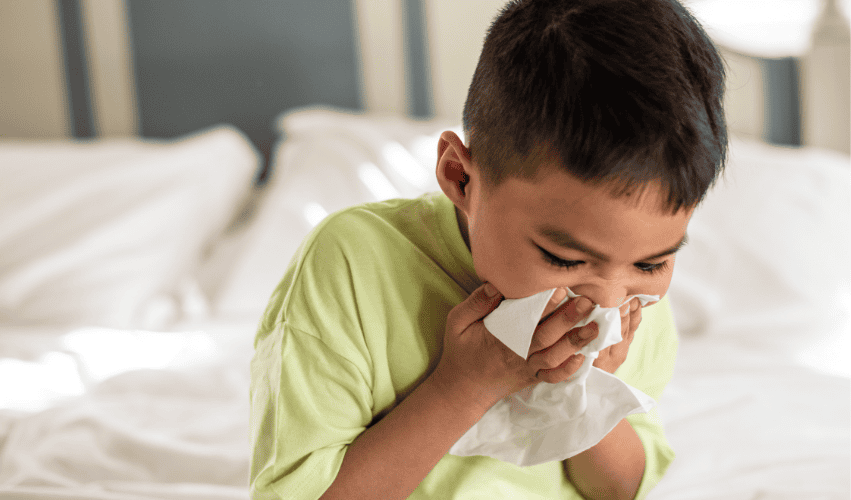
“Oh, my gosh,” you think as you wipe your child’s nose for the 20th time that day. Didn’t they just get over a cold last week?
For parents of young children, this can feel like a never-ending cycle. You may start to wonder: Is this normal? Is it just my child, or is every kid constantly sick?
The truth is, it really is every child.
Children are born with immune systems that are still learning how to work. They have the tools they need, but they haven’t yet been exposed to the many viruses and germs that adults have built immunity against over time. Every sniffle and cough is part of that learning process. Their bodies get sick so they can learn how to fight back and make antibodies for the future.
Add in school germs, playground contact, and smaller ear and nasal passages, and it’s no wonder so many children seem to be sick so often. Think of each cold as a practice round for their immune system.
While it can be reassuring to understand just how common runny noses and coughing fits really are for kids, it’s also important for parents and caregivers to know when something is more than just another routine bug or run-of-the-mill cold. The pediatric providers at The Baton Rouge Clinic and Affinity Health Group have decades of experience caring for children, and we want you to feel confident knowing what’s normal and what deserves medical attention.
Here’s a go-to guide so you know when and how to provide comfort care at home versus when it’s time to get your little one to the doctor for a closer look.
Common Childhood Illnesses
• Colds: Mild viral infections of the nose and throat. Since there are hundreds of cold viruses, children catch them often as they build immunity.
• Seasonal allergies: Not caused by germs, but by an immune response to pollen, dust, or mold. These can lead to sneezing, itchy eyes, and a runny nose.
• Ear infections: Often develop after a cold when fluid becomes trapped behind the eardrum. Children’s ear tubes are shorter and more horizontal, which makes it easier for bacteria to grow.
• RSV: A very common virus that feels like a cold in older children but can make breathing difficult for babies due to swelling in their small airways.
• Flu: A stronger viral illness than a cold, usually with high fever, body aches, and extreme fatigue.
• Stomach viruses: Sometimes called the “stomach flu.” These irritate the digestive tract and cause sudden vomiting or diarrhea.
• Post-viral cough: A cough that lingers for weeks after the infection is gone. This is usually caused by leftover airway irritation rather than a new illness.
What’s Normal
From your child’s point of view, feeling sick can feel like the worst thing in the world. As hard as it is to watch them not operate at 100%, many symptoms are part of a normal recovery.
A cold often lasts 7 to 10 days. It usually starts with a clear runny nose that may turn thicker or yellow before drying up. A low-grade fever (generally under 102°F) can actually be a good sign because it shows the immune system is working.
You may also notice:
• A mild cough
• Extra sleepiness
• Less interest in food
As long as your child is drinking fluids and still playing, their body is simply using energy to fight the infection rather than to run around or digest meals.
How to Help Your Child Feel Better
At home, you can support healing by focusing on comfort and hydration:
• Offer plenty of fluids such as water, Pedialyte, broth, or popsicles.
• Encourage rest so their body can recover.
• Use a cool-mist humidifier or steamy bathroom to help clear congestion.
• Use fever-reducing medicine if your child seems uncomfortable or miserable.
Avoid using antibiotics unless your doctor says they are needed. Antibiotics do not treat viruses and can disrupt healthy gut bacteria that support your child’s developing immune system.
When Parents Should Actually Worry
Most childhood illnesses are mild, but certain signs mean your child needs medical care. Trust your instincts and watch for these red flags:
• Breathing problems: Look for skin pulling in around the ribs or neck, flared nostrils, wheezing, or fast breathing. If your child seems to be struggling for air, call your doctor right away.
• High or lasting fever: A fever that lasts more than three days, or one that stays very high even with medicine, should be checked by a medical professional.
• Signs of dehydration: Crying without tears, very dry mouth, or no wet diaper or bathroom trip in 8 to 12 hours can mean your child is not getting enough fluids.
• Extreme tiredness: There’s a big difference between being tired and being lethargic. If your child is hard to wake, limp, or too weak to interact, seek medical care promptly.
• Symptoms that worsen: If your child seems to improve and then suddenly gets worse with a higher fever or stronger cough, it may be a secondary infection like pneumonia or an ear infection.
• Long-lasting illness: Most viral symptoms start to improve within a week. If a cough or runny nose lasts longer than 10 to 14 days or keeps getting worse, it is time for a visit to the pediatrician.
How Pediatric Providers Help and Why Local Care Matters
Pediatric providers are trained to tell the difference between normal immune system development and more serious illnesses. They can treat bacterial infections, manage breathing issues, and guide families through issues that require more than home care.
They also help protect children through routine vaccinations, which safely strengthen the immune system against dangerous diseases.
Having a trusted pediatric provider means you don’t have to guess when something feels off. Our local providers at The Baton Rouge Clinic and Affinity Health Group will get to know your child’s medical history and what is normal for them. This leads to better, more personalized care—a win-win for you and your kiddo.
If your child seems to be sick often and you’re worried, you don’t have to handle it alone. Our compassionate pediatricians are here to listen, examine your child, and provide gentle, expert care.
Request an appointment today and let us help your child feel better, faster.