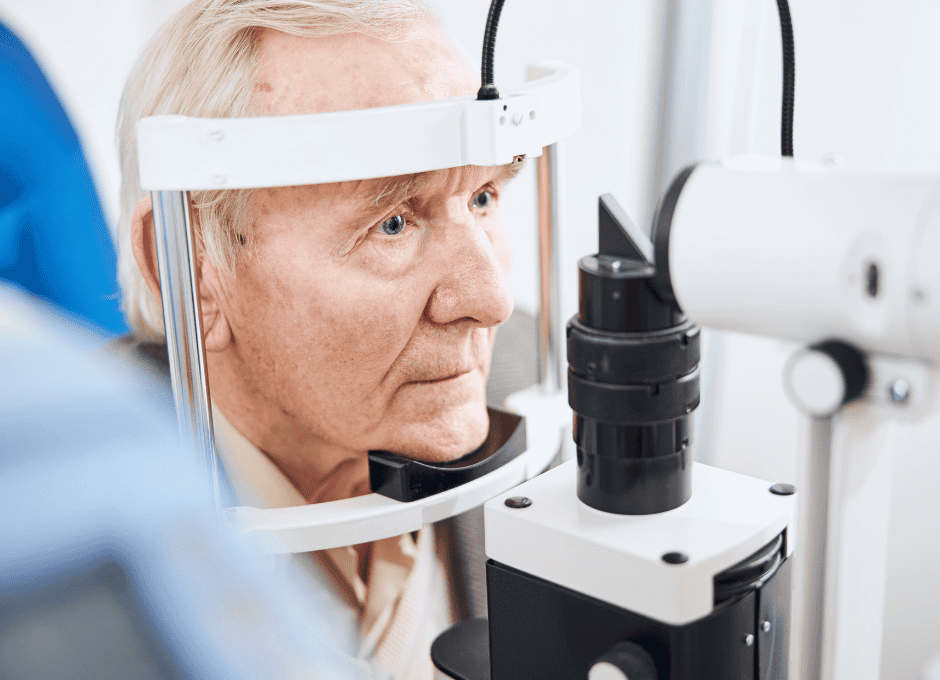
If you’re over 50 and noticing that your glasses just don’t seem to “fix” your vision the way they used to, you’re not imagining it. Many older adults slowly develop cataracts, often without realizing it at first. The change is subtle, slight blurriness here, a little glare there, until one day it feels like you’re looking through a fogged-up window that never quite clears. It’s a common part of aging, affecting most adults by age 50 in some form and nearly everyone by age 80. And while it’s normal, that doesn’t make it any less frustrating when everyday things like reading, driving at night, or recognizing faces start to feel harder than they should. Luckily, cataracts are easy to treat, and the expert ophthalmologists at The Baton Rouge Clinic can help you decide if your vision issues are from cataracts and provide treatment options.
What Are Cataracts?
A cataract is a cloudy area that develops in the clear part of your eye responsible for focusing light. It forms when proteins break down and clump together, creating cloudiness that interferes with vision. Under normal conditions, this part of the eye is transparent and allows light to pass through easily, helping to focus images onto the retina so you can see clearly. When cataracts develop, these protein clumps block and scatter light, making vision less sharp. Over time, the cloudiness can worsen and become denser, making it increasingly difficult to see. The affected area may also take on a yellow or brown tint, which can alter how you perceive colors.
Common Signs Cataracts May Be Affecting You
Cataracts don’t happen overnight. One day, you’re reading a book casually, and you suddenly discover that the text is a little more difficult to read. Maybe you’re having challenges seeing clearly while driving at night, when you’ve never had that issue before. Perhaps your trusty pair of glasses simply isn’t cutting it anymore. Here are some signs that you might be dealing with cataracts:
- Blurry, cloudy, or dim vision
- Double vision in one eye
- Sensitivity to light or glare
- Difficulty driving at night
- Needing a brighter light to read
- Halo patterns appearing around lights
- Colors appearing faded or yellowed
- Frequent prescription changes
All of these issues can impact your daily life. Blurred or cloudy vision makes it harder to perform essential tasks like reading, cooking, or managing medications. Additionally, faces may become difficult to recognize, leading to social discomfort and embarrassment. Bright lights, headlights, or sunlight may become overwhelming to the eyes, making it hard to go outdoors or work under bright conditions. And, most importantly, cataracts can impact your safety as impaired depth perception increases the risk of falls and mishaps, while challenges with driving (especially at night) can put you at higher risk of car accidents.
When to See an Eye Doctor
Schedule an eye appointment with an ophthalmologist if you have symptoms of cataracts or if you notice any changes in your vision. Blurred vision, flashing lights, and double vision can also be signs of more serious eye conditions, so it’s important to see an eye care provider to determine the cause and get the right treatment.
In the early stages, cataracts may be mild and manageable. You might only need simple adjustments like brighter lighting at home or an updated glasses prescription. However, cataracts can gradually worsen over time, making symptoms more noticeable and disruptive.
When vision changes begin to interfere with daily activities, your provider may recommend surgery. This is a common outpatient procedure that removes the cloudy natural lens and replaces it with a clear artificial one. In many cases, the replacement lens can also help correct astigmatism and improve nearsightedness or farsightedness, depending on the type of lens selected.
Why Choose The Baton Rouge Clinic
For patients experiencing vision loss from cataracts, The Baton Rouge Clinic provides expert treatment built by precision, advanced technology, and personalized care.
Our patients have access to leading-edge tools, and treatment is tailored to your lifestyle and vision goals. You may choose premium lens options, including multifocal implants that can reduce or eliminate the need for reading glasses, or specialized lenses designed to correct astigmatism.
Because cataract surgery is typically performed only once in a lifetime, the ophthalmologists at The Baton Rouge Clinic take time to carefully match each patient with the right lens based on their daily activities and visual needs. This ensures the outcome supports how you actually live, not just how you see in the exam room.
As a multi-specialty clinic, The Baton Rouge Clinic also offers coordinated care that connects your surgical plan with your overall health history for a safer, more seamless experience. If you’re ready to improve your vision and see more clearly, it may be time to schedule a visit.
Call us at (225) 246-9240 or request an appointment online to get started today!